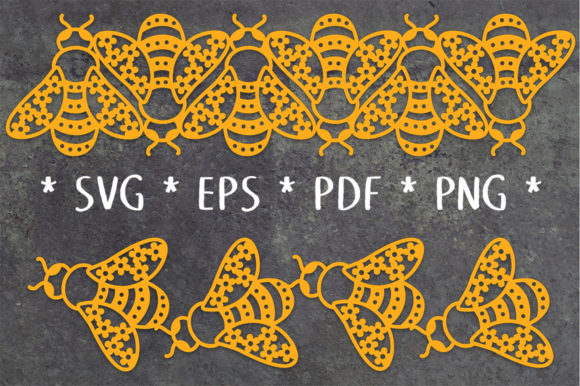
Floral Bee Repeating Borders for Graphics and Crafts
I recently received a request from a client launching a new line of organic honey and artisanal beeswax candles. They wanted a visual identity that felt warm, rustic, yet undeniably professional. They didn't want the typical corporate bee logo; they wanted something that evoked the feeling of a sunny meadow while maintaining high-end branding standards. This is where I turned to Floral Bee Repeating Borders. As a designer who frequently navigates the space between commercial viability and creative expression, I needed to determine if this asset could elevate their brand without overwhelming it.
The first impression of this design asset is immediate charm. The pretty papercut aesthetic creates a tactile mood, suggesting craftsmanship and attention to detail. It feels like a modern design approach rooted in traditional handmade aesthetics. For a small business branding project focused on natural products, this style hits the sweet spot between playful and polished. It naturally fits into categories like packaging design, editorial design, and social media graphics where a touch of whimsy can significantly boost audience engagement.
Real-World Application in Brand Identity
In my review process, I tested how Floral Bee Repeating Borders performs when integrated into a cohesive brand identity. The asset shines as a supporting element rather than a primary focal point. Imagine placing these borders along the edges of a product label or using them as a decorative frame for a website header. The repeating nature of the pattern allows it to create a sense of continuity across different marketing visuals.
For a print-on-demand seller, this SVG design is particularly valuable. I envision using it to create custom tote bags, mugs, and t-shirt designs that appeal to eco-conscious consumers. The papercut style translates beautifully to sublimation design and sticker design, adding a layer of texture that flat vector art often lacks. When used in Cricut projects, the clean lines ensure precise cutting, which is critical for professional-looking merchandise.
However, placement is everything. In a crowded layout, such as a busy flyer or a complex poster, this asset might compete with essential text. It works best in large layout areas or as a hero graphic where it can breathe. If you are designing a digital ad or a Pinterest pin, use it to frame the call-to-action button or to separate sections of your infographic. It adds a level of visual hierarchy that guides the viewer's eye without shouting for attention.
Navigating Design Constraints and Readability
No graphic design asset is universally perfect, and Floral Bee Repeating Borders has specific constraints that every designer must respect. While the intricate details are beautiful, they can become muddy when scaled down too small. If you attempt to use this asset for a tiny icon or a mobile app interface, the delicate floral elements may disappear or pixelate, ruining the visual trust associated with your brand.
I also found that this asset requires careful consideration regarding contrast. On light backgrounds, the white cutouts of the papercut style might get lost if the background color is too pale. Conversely, on dark backgrounds, the solid lines need to be bold enough to stand out. Minimalist branding projects that rely on stark simplicity should perhaps avoid this asset, as its ornate nature clashes with ultra-clean, corporate aesthetics. It is not suitable for professional corporate materials where strict adherence to geometric minimalism is required.
When evaluating readability, remember that decorative borders should never obscure text. Use them as a backdrop or a frame, ensuring there is ample negative space around any typography. Pairing this illustration with a script font might feel too busy, whereas a clean sans serif font provides a nice contrast that maintains professionalism. A display font could work for headlines, but the serif font option often complements the organic feel of the bees and flowers most effectively.
Technical Inspection and Commercial Viability
Before committing to a client project, I always perform a rigorous technical check. For a digital product like this, inspecting the file formats is non-negotiable. Since this is an SVG cutting template, verify that the vector paths are clean and editable. Open the file in your preferred software and check if the layers are grouped logically. Can you easily isolate the bees from the flowers? This editability is crucial for adapting the design to various needs, such as creating a PNG design for web use or adjusting colors for a specific brand palette.
If the download includes a PNG design, check the transparency quality. Are the edges crisp, or do they have jagged artifacts? Test the asset at both small and large sizes to ensure it holds up under scrutiny. Place it on real mockups, such as a coffee bag or a brochure cover, to see how it interacts with other textures. If you are planning to use this for commercial purposes, confirm the commercial license explicitly. Many digital assets restrict usage, so ensuring you have the right permissions is vital for avoiding legal issues with your clients.
Testing in black and white is another step I never skip. Sometimes color hides structural flaws in an illustration. By removing the color, you can see if the composition still holds together and if the visual hierarchy remains intact. This simple test ensures that the asset will look good even in monochrome print runs or faxed documents.
Why This Asset Elevates Creative Projects
Ultimately, Floral Bee Repeating Borders is more than just a clipart collection; it is a tool for storytelling. For a handmade business or a boutique product line, it adds an emotional appeal that resonates with customers seeking authenticity. It transforms a standard design into a curated experience. Whether you are building a Canva template for a blogger, creating an Etsy product listing, or developing a seasonal campaign, this design asset brings a cohesive, charming vibe.
It serves as a versatile component in a larger design bundle, allowing for endless combinations. You can mix it with other nature-themed illustrations to create a full collection of editorial design elements. For content creators and publishers, it offers a quick way to enhance blog visuals or newsletter headers without needing to commission custom artwork. The instant digital download format means you can integrate it into your workflow immediately, speeding up the production of marketing visuals.
In conclusion, while this asset requires thoughtful application, its potential to add warmth and character to a project is undeniable. It bridges the gap between digital convenience and the charm of physical crafts. For designers looking to infuse their work with a touch of nature and nostalgia, Floral Bee Repeating Borders is a reliable, high-quality choice that delivers on both aesthetic and functional fronts.